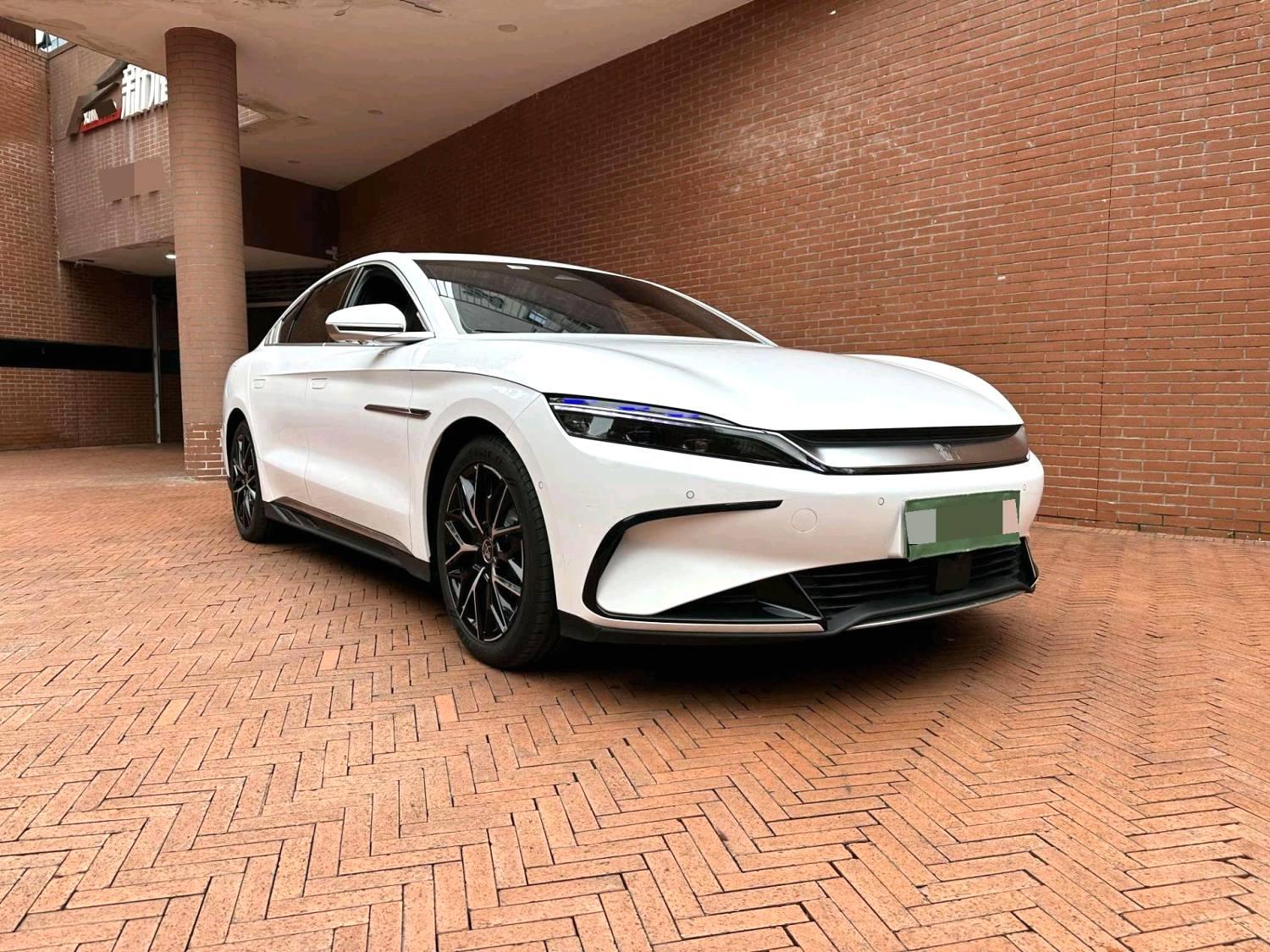
On a used electric car, one number decides whether you have a bargain or a liability: the battery State of Health. Here is exactly how we verify it before a single vehicle leaves China — and the Chinese-brand traps (BYD Blade chemistry, NIO’s leased batteries, region-locked warranties) that generic buying guides never mention.
The short version
- State of Health (SoH) is the battery’s remaining usable capacity vs. new. Aim for ≥ 85%; treat anything under 80% on a low-mileage car as a walk-away.
- Average EV batteries lose about 2.3% per year; LFP packs like BYD’s Blade lose closer to 1–1.5%.
- You can check SoH yourself for under $60 with an OBD-II dongle and an app — but for an import, insist on a dated third-party report.
- A China-market EV usually arrives with no honorable local warranty, and a NIO on BaaS may not include the battery at all.
Why State of Health is the #1 number when importing a used EV
On a petrol car you worry about the engine and gearbox. On an EV, the battery is 30–50% of the car’s value, and unlike a domestic buyer, an importer has no local warranty safety net. If the pack is tired, you cannot walk it back to a dealer three countries away.
State of Health (SoH) expresses the battery’s current usable capacity as a percentage of its original rated capacity. A pack at 100% SoH delivers its full original range; at 80% it delivers roughly four-fifths of it. Because degradation is gradual and mostly invisible from the outside, SoH is the single most reliable predictor of what a used EV is actually worth — and the number sellers are most tempted to fudge.
What counts as a 'good' SoH? Thresholds by age and chemistry
There is no single pass mark — it depends on age, mileage and chemistry. Use this tiered guide, then adjust for how old the car is: a 3–4-year-old EV should sit in the mid-80s to low-90s, so the same age at ≤ 75% is a red flag.
| SoH range | Condition | Buy / export verdict |
|---|---|---|
| 95–100% | As-new, light use | Ideal — premium resale |
| 90–94% | Healthy after a few years | Strong buy |
| 85–89% | Normal wear | Good — our export minimum |
| 80–84% | Lower bound of normal | Negotiate hard |
| 70–79% | Near warranty floor | Caution — price it in |
| Below 70% | Effectively end-of-life | Walk away |
Five ways to verify SoH — from free to professional
Layer these from cheapest to most authoritative. For a car you are buying blind and shipping overseas, methods 4 and 5 are non-negotiable.
From a 30-second glance to an export-grade report
- 1In-car battery menuTesla, BYD and NIO all expose a battery/energy screen. Fast, free, but easily reset — treat as a first sniff, not proof.
- 2Range-vs-rating mathCharge to 100%, read projected range, divide by the original rated range. 350 km shown against a 500 km rating ≈ 70% — a rough but revealing cross-check.
- 3OBD-II dongle + appA $30–60 ELM327/OBDLink dongle with Scan My Tesla, LeafSpy or Car Scanner reads true usable kWh, SoH and cell voltages.
- 4Professional diagnostic reportAn EV specialist or dealer ($150–400) produces a signed report — the document a serious buyer keeps on file.
- 5Third-party pre-export inspectionA CCIC-grade inspection ties SoH to the VIN, mileage and test conditions so the number survives the journey. This is what we run on every EV we ship.
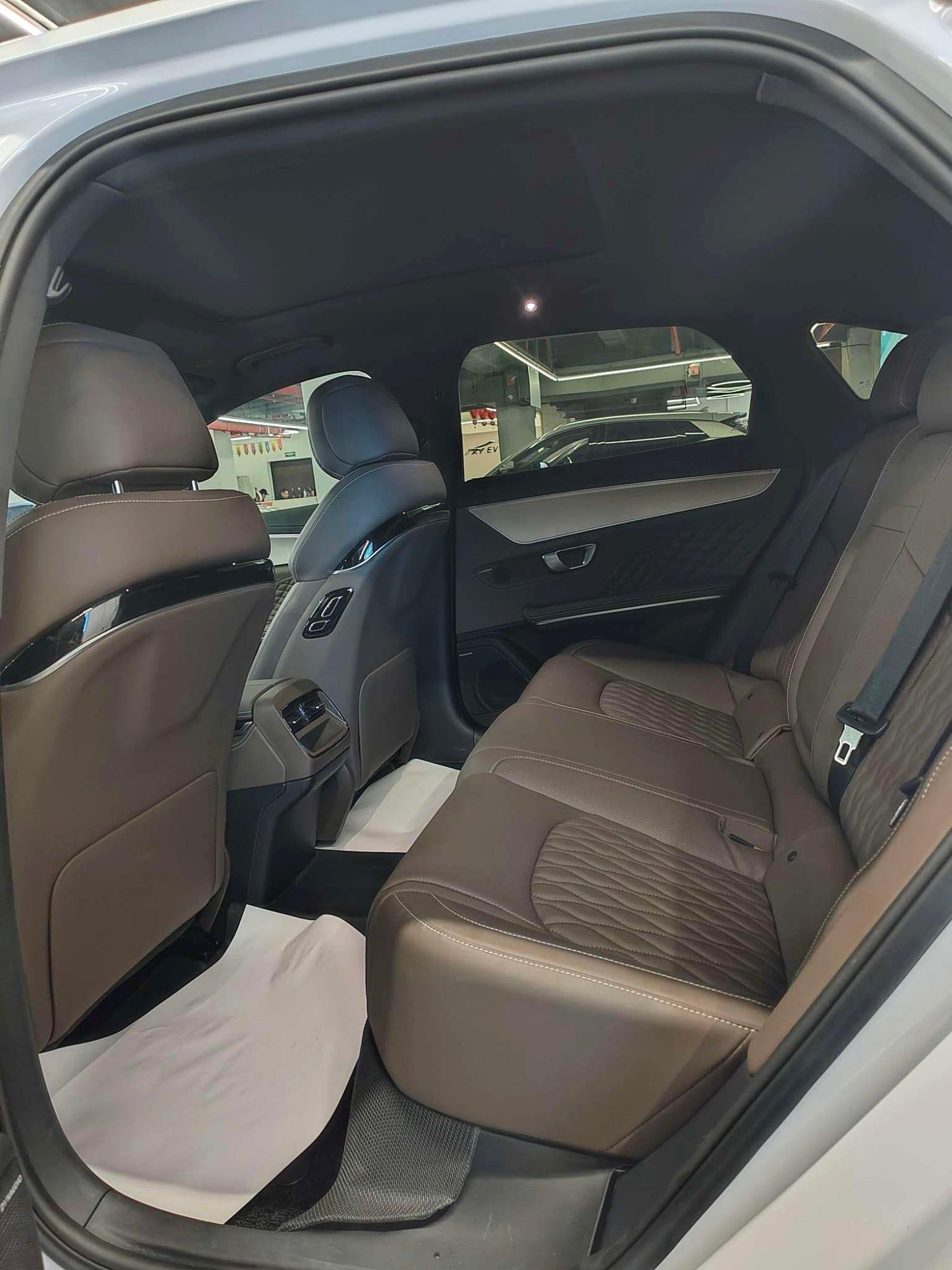 Green flag · ≥ 85% SoH
Documented SoH in the high-80s+ with tight cell balance.
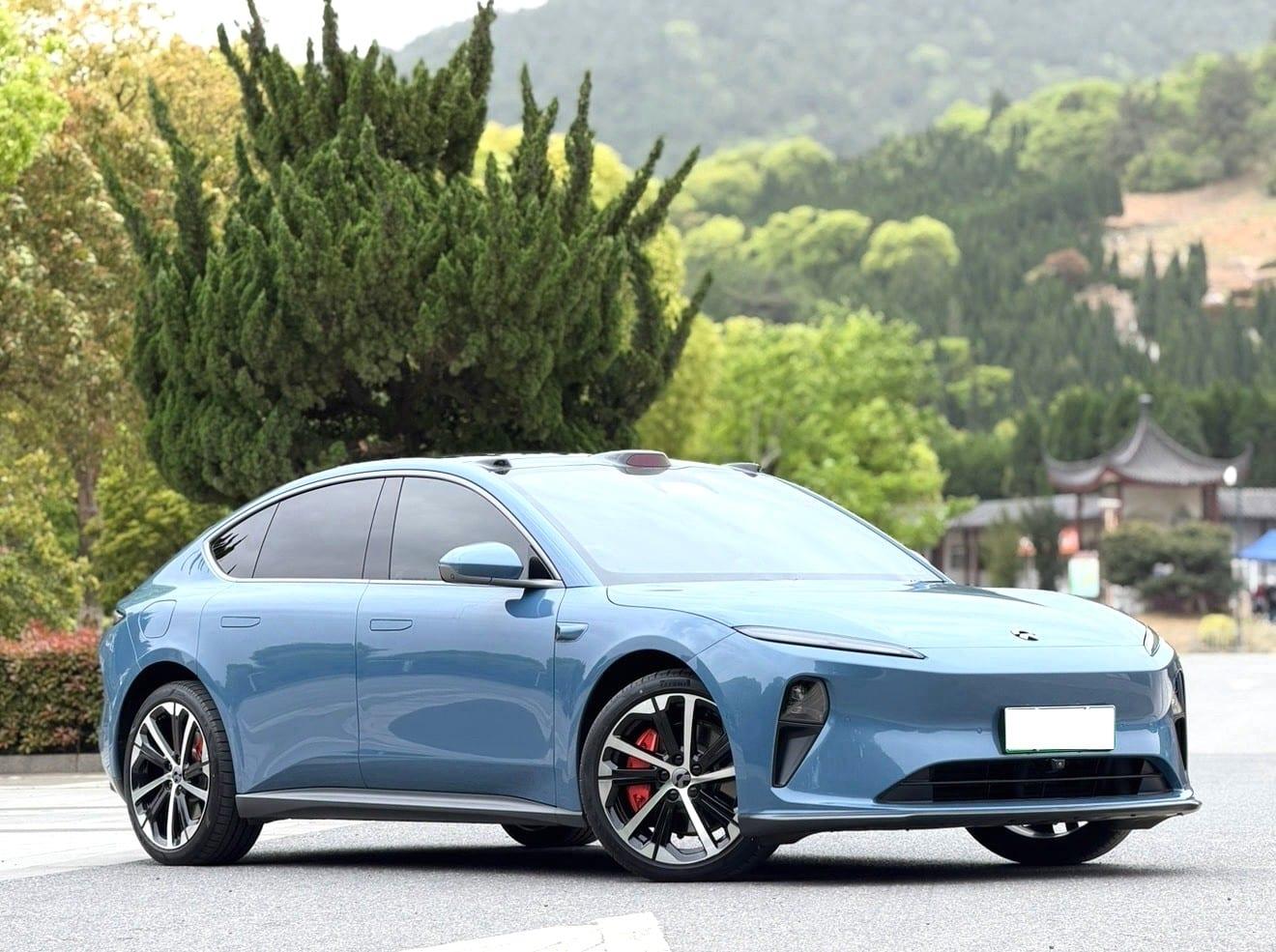 Red flag · < 75% SoH
Low SoH on a low-mileage car, or “report on request” with nothing dated.
How to actually read the BMS data / battery report
A real report is a PDF with numbers, not a verbal “battery’s fine.” Five figures matter:
- Nominal (rated) kWh — the pack’s original capacity.
- Current usable kWh — what it holds today. Usable ÷ nominal ≈ SoH.
- SoH % — the headline, but only trustworthy alongside the numbers above.
- Cell-voltage spread — the hidden tell. Tight and even is healthy; a wide gap between the strongest and weakest cell signals imbalance and future failure.
- Test date, temperature and mileage — a reading taken cold or months ago is not today’s truth.
BYD Blade battery — why it changes the math
BYD’s Blade is an LFP cell-to-pack design, and its chemistry is genuinely kinder to a used buyer: validated beyond 3,000 cycles, tolerant of frequent 100% charging, and strong on thermal safety. BYD warrants the Blade pack to 8 years / 250,000 km with ≥ 70% SoH in Europe. For hot-climate and high-mileage export markets with thin service networks, that durability is a real residual-value support — one reason BYD models such as the Han and Song Plus are among our steadiest EV exports.
The NIO BaaS trap — you may not own the battery
NIO pioneered Battery-as-a-Service (BaaS): buyers can take the car without the battery for roughly RMB 70,000–108,000 less, then rent the pack monthly (about RMB 728–1,128). Brilliant domestically — a landmine for importers.
Warranty transfer across borders
Factory battery warranties (Tesla 8 years, BYD 8 years/250,000 km, most makers 8 years/160,000 km) are VIN-based and normally transfer to later owners — but they are region-locked. A China-market VIN is generally not honored by dealers in the destination country, so an imported used EV often arrives with remaining warranty term but no serviceable coverage. Verify with the maker for your market before you assume protection; if in doubt, price the car as out-of-warranty.
Red-flag checklist before you wire money
- No dated SoH report tied to the VIN, or “we’ll send it later.”
- SoH under ~80% on a car with suspiciously low mileage.
- Wide cell-voltage spread, or the report omits cell data entirely.
- Heavy DC-fast-charging history (frequent >100 kW sessions can roughly double degradation).
- A NIO whose battery-ownership (BaaS vs owned) the seller can’t confirm.
- Warranty claimed as a selling point without written confirmation it transfers to your market.